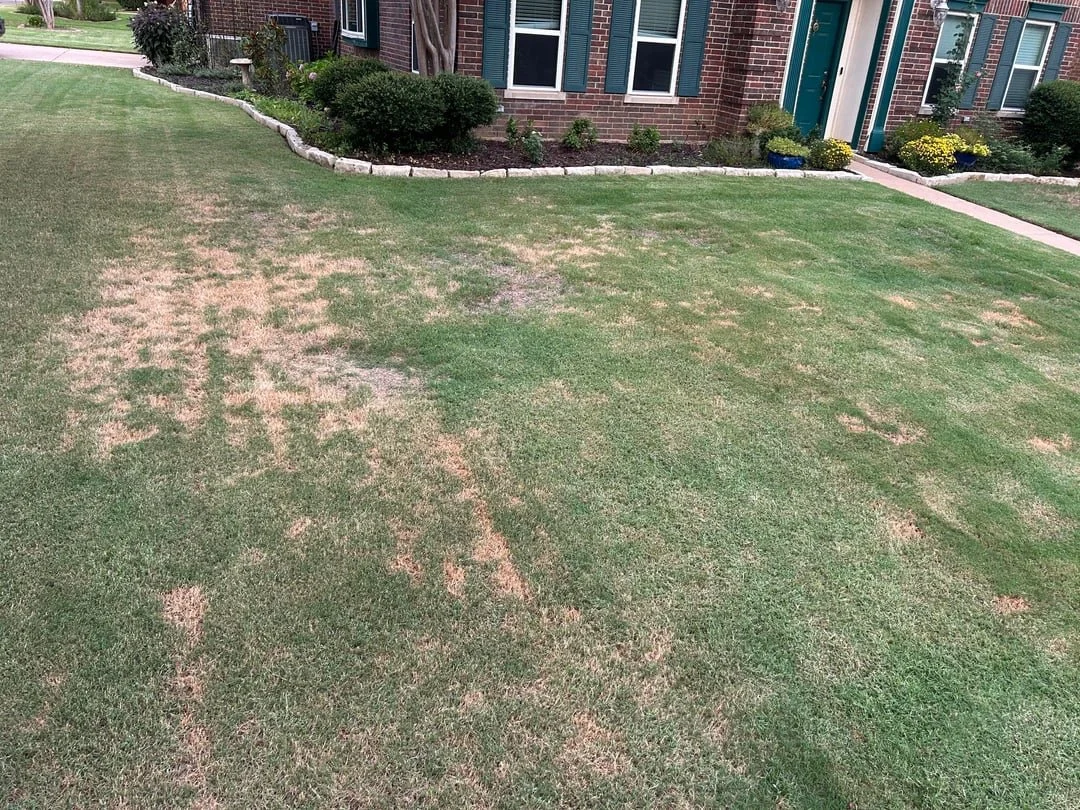
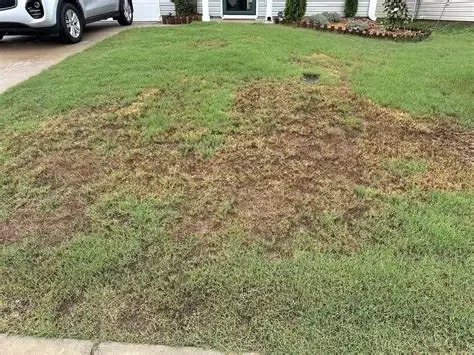
Why is my lawn turning brown in summer?
Why Is My Bermuda Grass Turning Brown in the Middle of Summer?
A healthy Bermuda grass lawn can be one of the most beautiful features of a Phoenix landscape, but it does require the right care. Every summer we get calls from homeowners asking why their lawn suddenly started turning brown, even though it looked great just a few weeks earlier.
We’ve maintained Bermuda lawns across the Phoenix area for years, and these are by far the two most common problems we see every summer
In most cases, there are two common causes.
1. Your lawn isn’t getting enough water
The most common reason Bermuda grass turns brown during the hottest part of the summer is inadequate irrigation. This can happen for several reasons:
The sprinkler system isn’t applying enough water.
Sprinkler heads have poor coverage or need to be adjusted or replaced.
The irrigation schedule isn’t set correctly for July and August temperatures.
Even if your timer is running, dry spots can develop if parts of the lawn simply aren’t being covered by the sprinklers.
2. Your winter ryegrass was taking over and choked it out:
If you overseeded your Bermuda lawn with ryegrass during the winter, that could also be contributing to the problem.
Many homeowners water heavily in the spring to keep the ryegrass looking lush. The problem is that ryegrass isn’t designed to survive Phoenix’s extreme summer heat. By July and August, even a small amount of heat stress causes it to die.
Meanwhile, the thick ryegrass canopy has been shading the Bermuda grass underneath for months, preventing it from receiving enough sunlight to fully recover. When the ryegrass dies, it often leaves behind thin areas because the Bermuda never had a chance to fill in.
How to Fix an Underwatered Bermuda Lawn
If you did not overseed with ryegrass, irrigation is probably your biggest issue.
I recommend having a qualified irrigation specialist inspect your sprinkler system. They can:
Check sprinkler coverage.
Adjust or replace sprinkler heads.
Inspect valves and nozzles.
Verify that your irrigation controller is programmed correctly for the hottest part of the year.
Once your irrigation system is corrected, your Bermuda grass should begin recovering.
While the lawn is filling back in, start a regular nitrogen fertilizer program. One fertilizer I’ve had good results with is Turf Royale 21-7-14. Apply it every 4 to 6 weeks during the growing season.
One tip many homeowners don’t know is to lightly spread fertilizer around the edges of brown or damaged areas. This encourages the healthy Bermuda surrounding the dead spots to spread into those areas more quickly.
How to Fix a Lawn That Had Winter Ryegrass
If your lawn was overseeded with ryegrass, I recommend dethatching and core aerating the lawn.
This helps:
Remove dead ryegrass.
Thin any remaining green ryegrass.
Improve water penetration.
Get fertilizer down to the Bermuda roots.
Allow more sunlight to reach the Bermuda grass.
Ryegrass is a bunch-type grass that creates a very dense canopy. Until that canopy is opened up, Bermuda has a difficult time spreading.
After dethatching and aerating, begin a regular nitrogen fertilizer program every 4 to 6 weeks.
One thing to understand is that recovery takes time. If the ryegrass has heavily shaded the Bermuda throughout the spring, you may not have a completely full lawn again until the following growing season. That’s normal.
How to Prevent This Next Year
If you enjoy having a winter ryegrass lawn, the key is managing it before summer arrives.
Ironically, when your ryegrass looks its absolute best in March—and you’re proud of how great it looks—that’s exactly when you should start thinning it.
I recommend using a vertical mower (verticutter) once in March and again about a month later. This removes some of the ryegrass density and allows sunlight to reach the Bermuda before summer arrives.
The ryegrass will be stressed temporarily but usually recovers within a week or two. More importantly, your Bermuda will have a much better opportunity to wake up and begin growing before extreme summer temperatures arrive.
I also recommend using slow-release fertilizers during late winter and early spring. They promote steady growth without creating an overly thick ryegrass canopy that can smother the Bermuda underneath.
Final Thoughts
Every lawn is a little different, but in my experience, almost every brown Bermuda lawn in the middle of a Phoenix summer comes back to one of two things: irrigation problems or winter ryegrass management.
If you address those two issues early, your Bermuda grass has an excellent chance of staying thick, healthy, and green throughout the summer.
If you’re not sure whether your lawn has an irrigation issue or is recovering from winter ryegrass, a professional evaluation can usually identify the cause in just a few minutes. Correctly diagnosing the problem is the first step toward getting your Bermuda lawn healthy again.